Showing posts with label Indian - Kerala. Show all posts

Friday, 25 September 2015

Nadan Mutta Roast - Kerala Egg Roast


Egg Roast is a popular dish served in Kerala, my home state. It tastes awesome with a lot of Kerala Breakfast items like Appam, Idiyappam, Parota etc. You can serve this is roti or rice as well. To me,the key taste ingredient is Curry Leaves. They impart an awesome aroma to this dish.

Wednesday, 8 April 2015

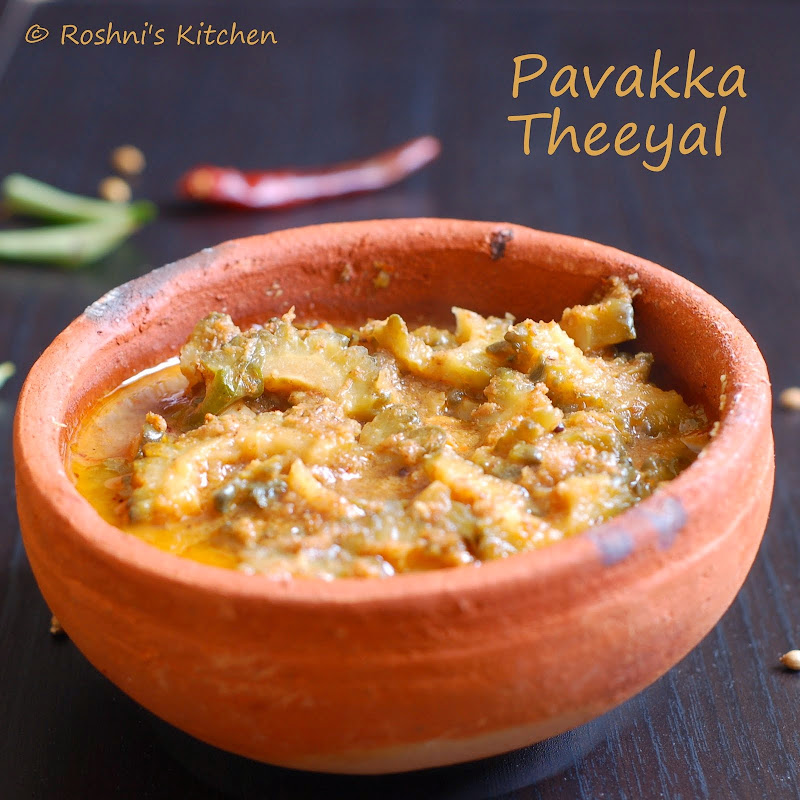
Pavakka Theeyal - Bitter Gourd Cooked in a spicy Coconut Sauce - Vegan


Theeyal is a side dish for Rice made in the South Indian State of Kerala. It basically has its flavours coming from Shallots. The spice mix includes red chilli, coriander and curry leaves. The key to a tasty theeyal is the perfect browning of the coconut. The word theeyal itself means charred.

Tuesday, 31 March 2015

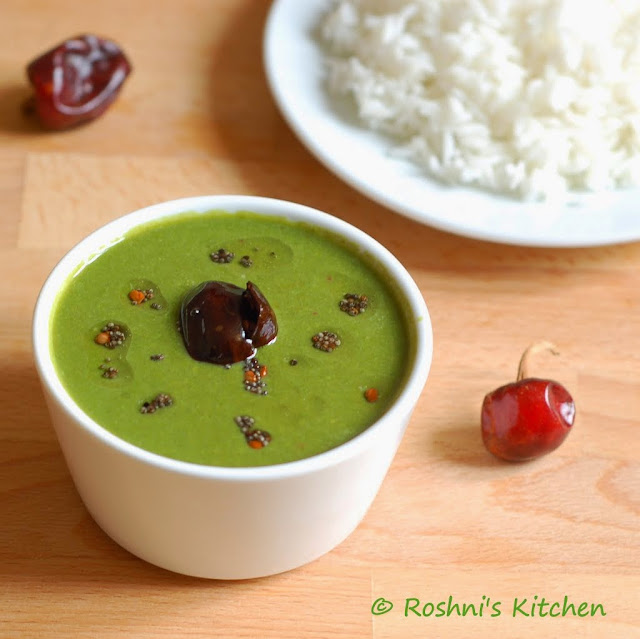
Mor Keerai - Spinach cooked in a coconut and yogurt sauce - Spinach Soup

Mor Keerai is a traditional recipe from Palakkad region of Kerala (in India). As I have mentioned before my one stop for all Palakkad recipes is Palakkad Cooking by my friend Kaveri. This is also adapted from her recipe.


Though traditionally served as a side dish, one other way I loved eating this was as a soup! I call it my Spinach soup with Chilli Oil dressing!

Wednesday, 8 October 2014

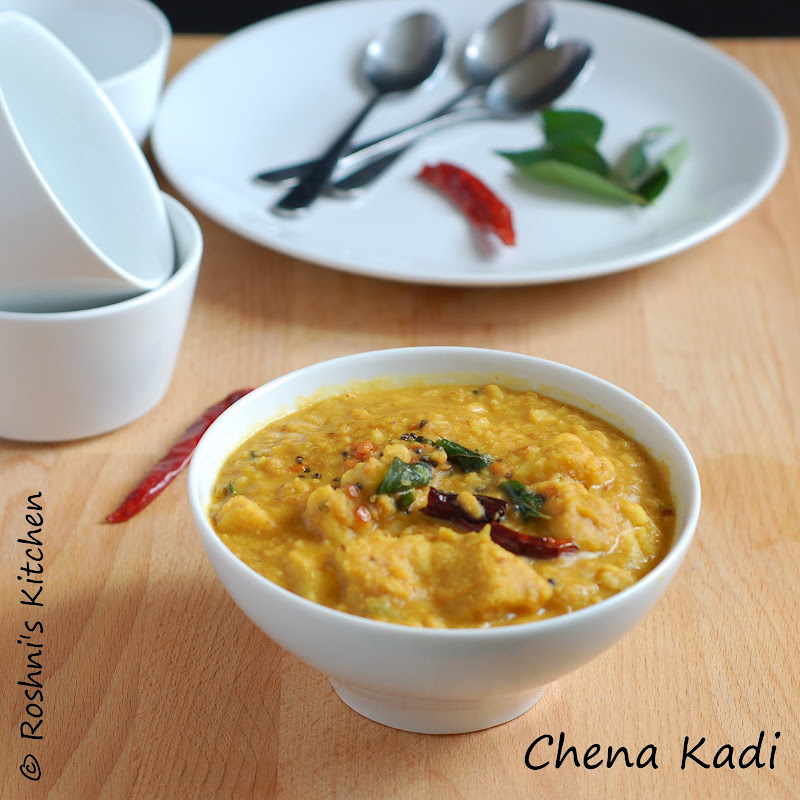
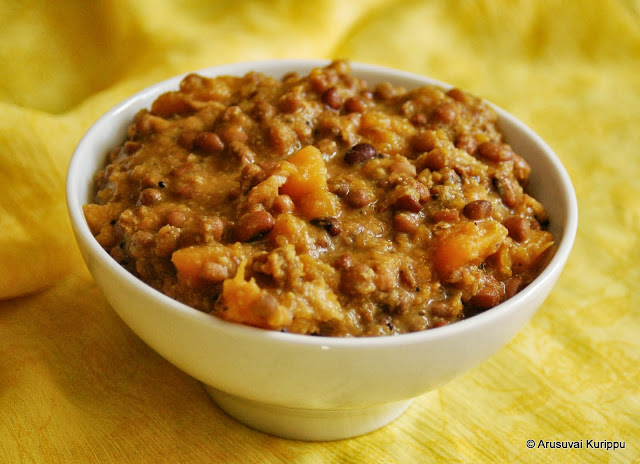
Chena Kadi - Yam Stew with Lentils and Roasted Coconut

Chena Kadi is a dish that invokes memories of my childhood. It is a dish my mom used to make often and we used to love it. The food prepared in my home was a wonderful mix of all the cultures we have been part of. Tamil food from our origins, Kerala food from the land we lived in, North Indian food cause my dad liked it and then many others that my mom learned from friends and family. This is probably a recipe she learned from a friend cause it is not a common dish among Malayalees nor is it a Tamil dish. This is a dish prepared by the Varma Community in Kerala. 

As I have told you before, I was not too much into cooking when I was younger. So I lost the recipe for this dish with my mom. I have been craving to make this for a long time and finally got a chance to see it being made in a TV show. I was really excited and noted the recipe. When I made it today and tasted the first spoonful, it literally brought tears to my eyes. It was exactly as I remember it. 


Friday, 22 November 2013

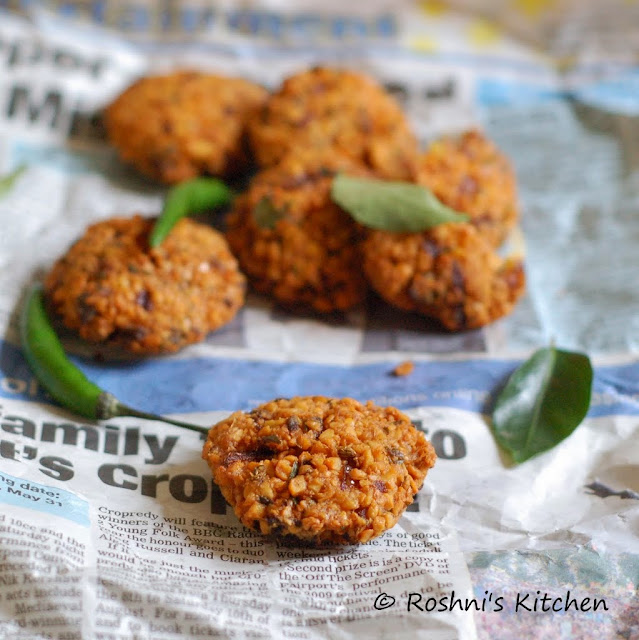
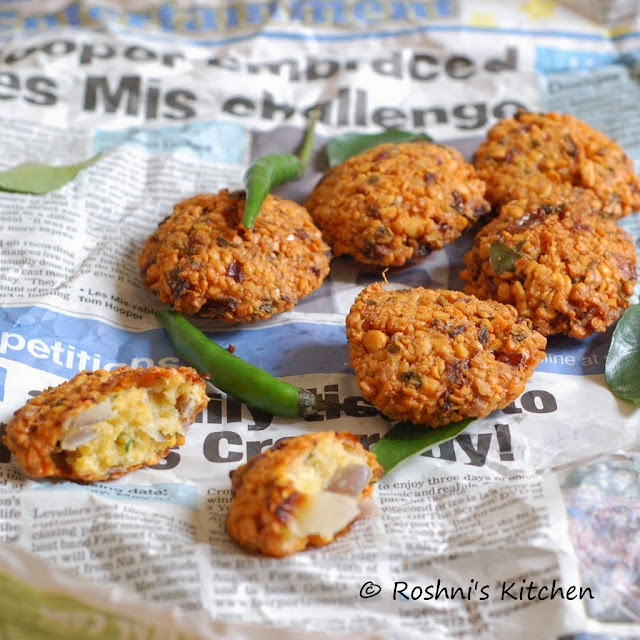
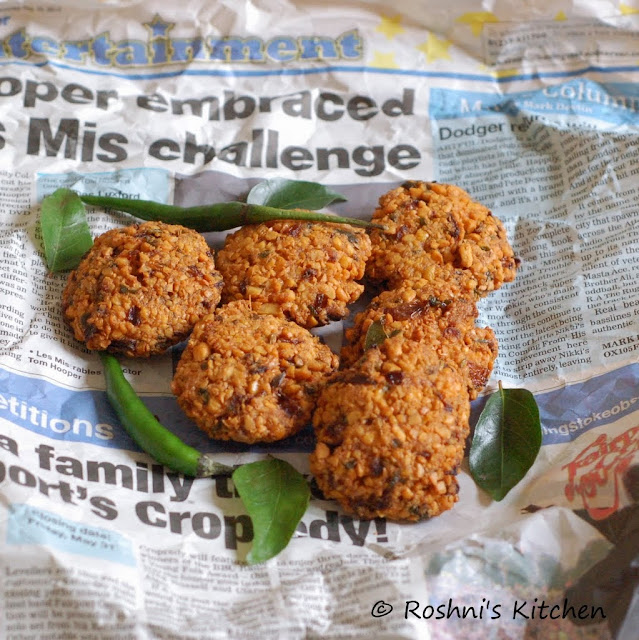
Parippu Vada - Masala Vadai - Paruppu Vadai - With tips to making crunchy vadas


Parippu Vada (as it is known in Kerala) or Masala Vadai or Paruppu Vadai (as it is known in Tamil Nadu) is a very popular snack in Southern India. Nothing can beat the taste of a good Parippu Vada with some tea (or coffee may be) on a cloudy/rainy day.


When munching on Vada or any savoury fried items for that matter with some tea, I always wonder about the cultural difference. To start closer to home, in Kerala most people prefer to have tea with Vada where as in Tamil Nadu (especially in my husbands place) it is always coffee. I like my vada and tea at the same time (one in each hand), where as I find most tamilians prefer to finish their snacks and then drink their coffee.

Now moving on to place where I am now, yes you got it in UK. On a daily basis biscuits are enjoyed with tea (by dunking). Well, that is one thing Indians have learned from British. The taste of dunked biscuits is just awesome. On special days or when a few ladies meet (what could be more special than friends getting together), it is cakes with tea/coffee. In India we almost always associate cake with dessert. So for me it is quite hard to get my head around cake with tea. Does something sweet not affect the taste of the drink? Well, to each their own.

What is your tea time story? Do share with me!


The Key to a good Parippu Vada is the crunchiness. Though quite simple to make, getting the texture right can be quite daunting if you do not know the trick. If you add too much water, the batter will be too soft resulting in a vada that does not have that crunch and texture to it. If you add little and you do not shape it right, it will disintegrate the moment you drop it in oil. Read below for tricks of how to get that perfect crunch!

Ingredients

Channa Dal  1 cup
Rice Flour 2 tbsp
Onion 1 finely chopped
Coriander Leaves finely chopped
Salt little less than 1 tsp (or to taste)
Oil for Deep frying

Make a paste
Curry Leaves 2 sprigs
Ginger 1 inch piece
Fennel seeds 1 tsp
Green Chilli 1 (more for spicier vada)

Method of Preparation

1. Soak the channa dal for 3 hours. Drain the water.

2. Make a rough paste of curry leaves, ginger, fennel seeds and green chilli without adding any water.

3. Pulse the channa dal without any water in a food processor till it is broken dal kind of stage. Take 1/3 of this and add to a blender with 1-2 tbsp of water and make a fine paste. If you do not have food processor, take 2/3 of dal and pulse in a blender/mixie. Then take the rest 1/3 and make a paste.

4. Take all of the dal in a bowl. Add the curry leaf paste to it. Add rice flour, salt, finely chopped onions and finely chopped coriander leaves to this. Mix everything well.

5. Heat oil in pan for frying. Keep a big bowl of water for dipping your hand.

6. When the oil is ready, keep it in low flame. Dip your fingers in the bowl of water. Take a small walnut size portion of the vada mix. Roll into a ball. Wet your fingers again and gently flatten the ball making sure that it does not crack on the top or sides.

7. Gently slide it into the oil.

8. Repeat for 2 or 3 more balls.

9. Increase the flame to medium. Do not touch it till the bottom side is cooked.

10. Once done, flip them over and cook the other side.

11. Drain on to a paper towel.

12. Repeat from step 6 for the rest of the mix.

Enjoy with a piping cup of tea (or coffee). 

Wednesday, 20 November 2013

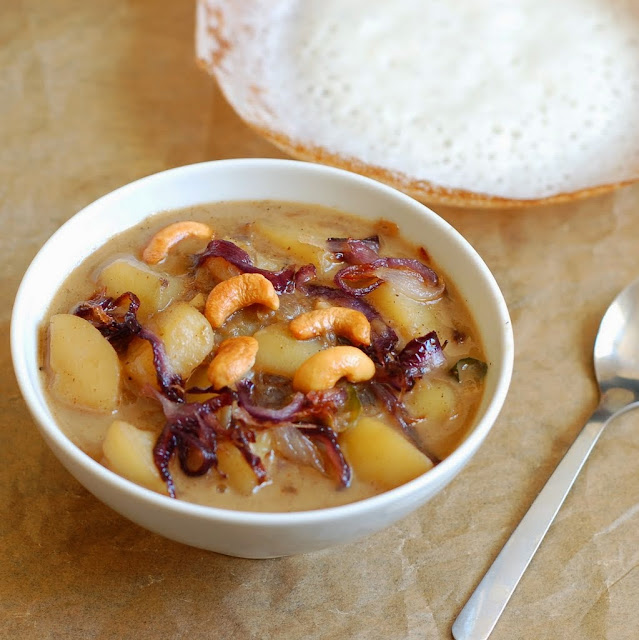
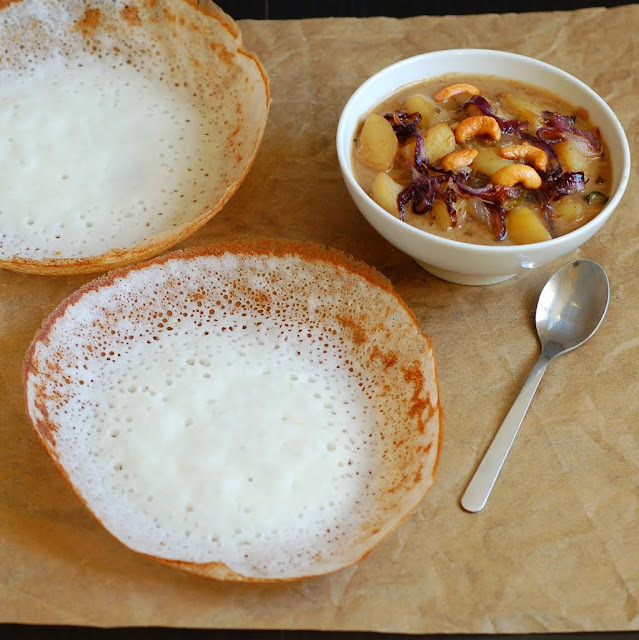
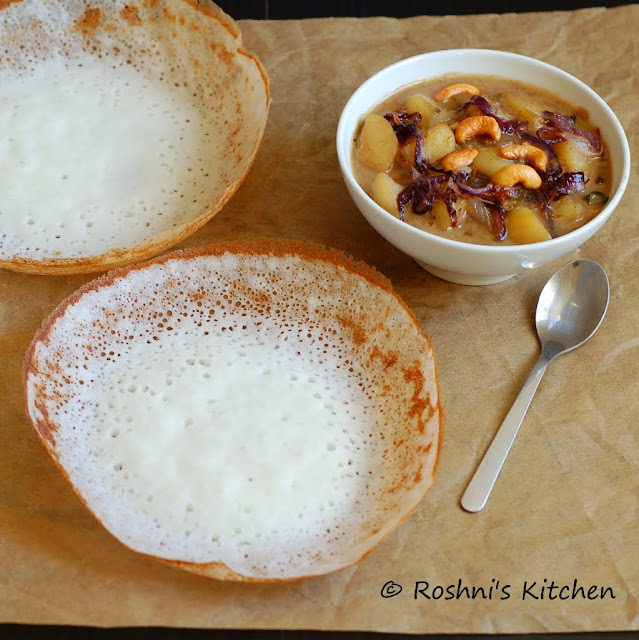
Potato Stew - Vegan Recipe - Potatoes and Onions cooked with coconut milk and spices


Last week I presented to you the Recipe for Aappam. The lacy, spongy crepe from my native place, Kerala. What good is a dish without its perfect accompaniment. So here you go! Hope you enjoy it.

Check out other Stew recipes in my blog
Soya Stew
Vegetable Stew


Ingredients

Potato 8 medium (about 500gms)
Coconut Milk 1 can

Cinnamon 2 inch piece
Cardamom 4
Clove 4
Star Anise 1
Bay Leaf 1

Onions 2 sliced
Garlic 5 pods sliced
Green Chillies 4 sliced
Ginger 1 inch piece sliced
Curry Leaves 2-3 sprigs

Pepper powder 1/2 tsp
Garam Masala 1 tsp

To fry
Onions 1 sliced
Cashews 10-15

Oil and salt to taste

Method of Preparation

1. In a pan, heat some oil. Add cashews. Fry little till it browns a little. Remove to a bowl.

2. In the same oil, add 1 sliced onion. Saute till it is nicely browned. Keep it along with the cashews.

3. In the same pan, add the Cinnamon, cardamom, Clove, Star Anise and bay leaf.

4. When it sizzles, add sliced onions. Saute till it starts to brown.

5. Add sliced garlic, ginger, green chilli and curry leaves. Saute till the onions brown a little.

6. Peal and cube the potatoes. Add to the pan. Saute till it is almost cooked.

7. Also add the pepper powder, garam masala and salt.

8. Take part of the coconut milk (about 1/2 to 1 cup). Mix with 1 cup of water and add to the pan.

9. Close and cook in low-medium heat till the potatoes are cooked and everything comes together.

10. Finally add the rest of the coconut milk and cook in low flame for 5 more minutes. Adjust seasoning as required at this stage.

Serve with some AappamKerala ParotaIdiyappam

Saturday, 16 November 2013

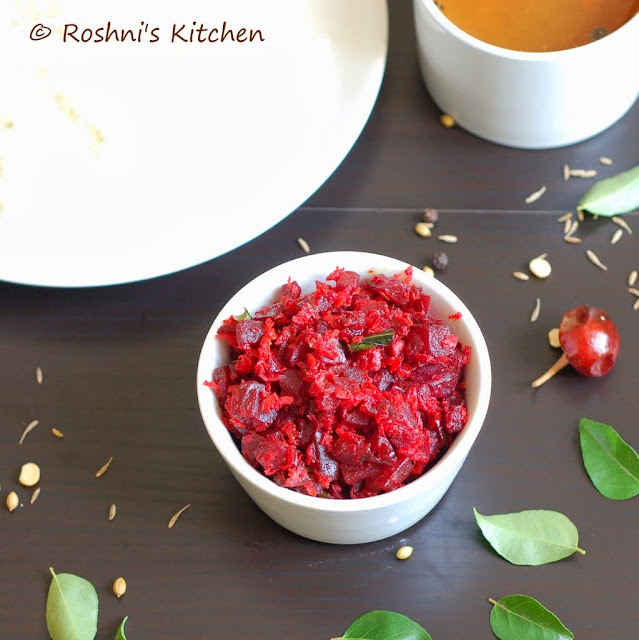
Beetroot Thoran - Beetroot Stir Fried with Coconut and Spices

Thoran (poriyal) is a side dish that is very popular in Southern India. It is prepared with a variety of vegetables like Cabbage, Beans, Carrots or sometimes even a combination of those. No festive meal is complete without this humble Thoran.


When I signed up for VVP (Virtual Vegan Potluck) I knew I wanted to make a dish that would showcase my native place. The key ingredient of this Potluck is Beets. I have prepared a variety of dishes with Beetroot. I have a couple more that are coming soon. So you get the idea, we love this humble vegetable a lot.

Beetroot Masala (british style beetroot curry)
Beetroot Stir fry
Beetroot Kichadi (Raita)
Beetroot Kootu

Ingredients

Beetroots 4
Onion 1
Coconut 1/2 cup
Cumin seeds 1 tsp
Turmeric Powder 1/2 tsp
Curry leaves few
Green Chilli 1

Oil and salt to taste

Method of Preparation

1. Finely chop the onions and beetroot.

2. Heat a little oil in a pan. Add the cumin seeds, turmeric powder and curry leaves.

3. When it sizzles, add the onions.

4. Saute till it is slightly browned.

5. Add the beetroot and saute till it is cooked. Do not add any water.

6. Pulse the coconut and green chilli in a food processor. Add to the beets along with some salt.

7. Mix well and cook for another 2-3 min.

Serve with some rice!

This Potluck is a linkup of more than a 100 recipes (Yes, All Vegan and Oh, yes All Super Tasty). I am off to check out all the recipes.. Why don't you join me? If you want to start at the beginning of the chain, click here and check out the details of the Potluck here!


Friday, 15 November 2013

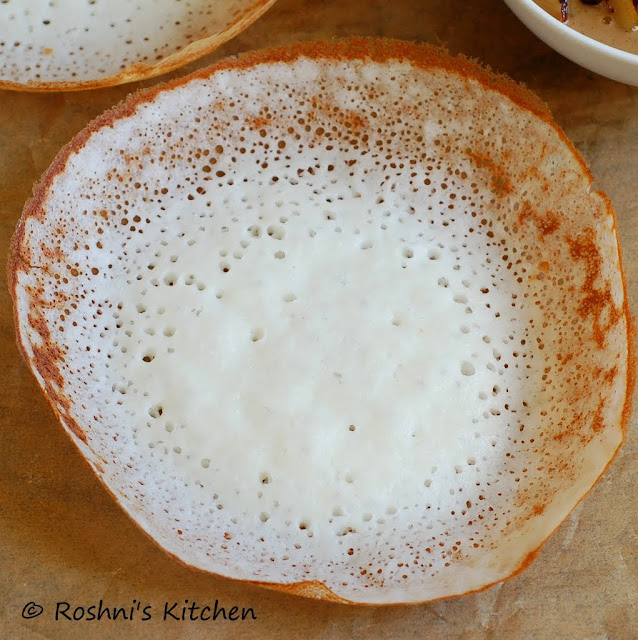
Aappam with Yeast - Appam - Vegan recipe - Step by Step - Happy 2nd Birthday to the blog


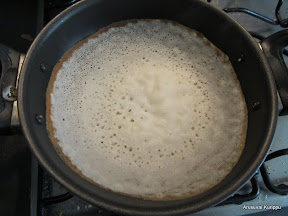
Aappam/Appam is a Breakfast recipe from the state of Kerala. It is characterised by the spongy centre and the crispy outer rim. Apppam, PuttuIdiyappam and Dosa represent a morning breakfast in Kerala. They are all usually served with Spicy Gravy either vegetarian or non vegetarian.

If you are looking for Appam with Baking Soda (Appam without Yeast), Click here!

When I started blogging a couple of years back, I made a version for the blog. I wanted to make something special for the blog's birthday :-) After all the diwali hoopla, I was not in a mood for an elaborate sweet or a bake. So I decided to revisit my first post and make a new version of it. The version I made first uses Baking Soda. This one is the more authentic version using Yeast. I will also post a recipe for Potato Stew - the classic combo for Appam in a couple of days. In the meanwhile check out the Vegetable Stew and Soya Stew recipes here.


This is typically served in Christian homes in Kerala for Christmas Breakfast

Ingredients

Raw Rice (Pacha Arisi) 1 Cup 
Par Boiled Rice (Idli Rice) 1 Cup 
Grated Coconut 2 Cups (Use Fresh or Frozen, dried ones won't work)
Cooked Rice A handful (if available)
Yeast 1 tsp
Salt 1.5 tsp
Sugar 2 tbsp
Coconut Milk (optional) 2 cups (You can use Milk or even water here)

Method of Preparation

1. Soak both the rice together for atleast 3 hours. Drain the water. 

2. Grind the soaked rice, coconut and cooked rice into a smooth paste adding enough water. I used a Grinder (used for making idli batter). A mixie can be used as well. I added around 3 cups of water, adding it in intervals. Coconut water is recommended. I did not have any, so did not use.

3. Once done, add yeast, salt and sugar. Mix well. Keep it for 12 hours to allow it to ferment.

4. Just before making add some milk (or coconut milk or even water) to bring the batter to the correct consistency. This should be watery than the normal dosa batter.

Method of preparing Aappam/Appam

1. Heat an Aappam Chatti (a small Kadai with lid will do). Use a small piece of cloth or tissue. Dip it in little bit of oil and keep. Just rub it on the Chatti each time.


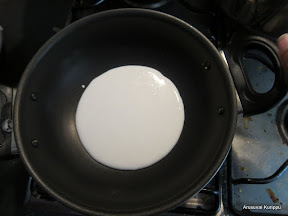
2. Pour a laddle of batter into the chatti


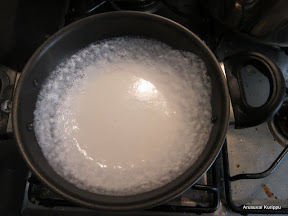
3. Hold the sides of the chatti and rotate so that there is a layer of batter all around and the rest of the batter is the centre. Appam has thin crispy edges and soft fluffy centre.


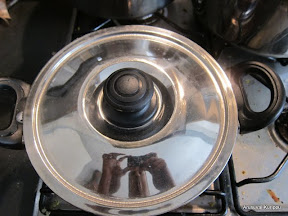
4. Close it with a lid


5. Let it cook for a minute or so till the sides are crisp and the centre is cooked


6. Remove from pan and serve with Stew or Kadala Curry

Monday, 16 September 2013

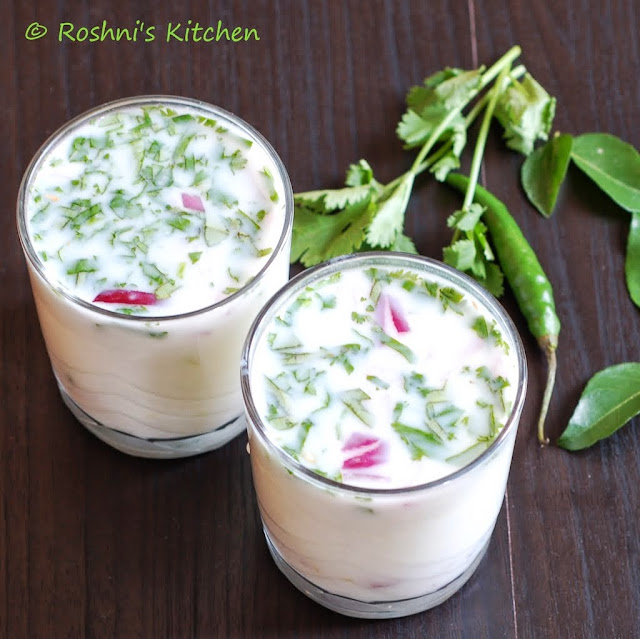
Neeragaram - Neer Choru - Pazham Choru - Spiced Rice and Buttermilk Porridge

When I think of simple village food (gramathu sappadu), the first thing that comes to my mind is the Pazham Choru. It is basically a way to eat up left over rice. In our homes, my mom used to add some water to the left over rice and leave it in the kitchen counter. Next morning, you can drain the water and make this Pazham Choru. Though in those days it was not considered as a fancy food, it has great cooling properties. Yes, I know what you are thinking. Why am I posting it now as summer is over. Well in India it is always summer enough for Neer Choru!


I saw a couple of bloggers (Sangee and Radhika) posting recipes similar to this with Oats (a modern twist to the traditional staple). I am yet to try with Oats. Will update once I do.

This is traditionally served in Man Chatti (earthen pots). It adds to the cooling properties of the buttermilk. You can add all of the below spices or just some. It will taste awesome just like that.

Ingredients (makes 2 cups)

Cooked Rice 1/3 cup packed
Yogurt 2-3 tbsp
Water 2 cups
Shallots 1 sliced (you can use onions if you don't have shallots)
Green chilli 1 finely chopped
Curry leaves few
Ginger a small piece finely chopped
Coriander leaves few
Salt to taste

Method of Preparation

1. Mash the rice finely.

2. Take the yogurt in a bowl. Add water to it and churn it. You can use a wire whisk for this. In India we use a wooden churner (called Mattu in tamil).

3. Add the salt, green chilli, ginger, curry leaves, coriander leaves and shallots. Mix well.

4. Add this to the mashed rice. Mix well.

This works as a great dinner for the day when you had a heavy lunch or did I tell you a great food for dieting!


Check out the other AGC thoughout this week 
AnushaJayanthiKavithaPriya MRadhikaPriya S

Sunday, 18 August 2013

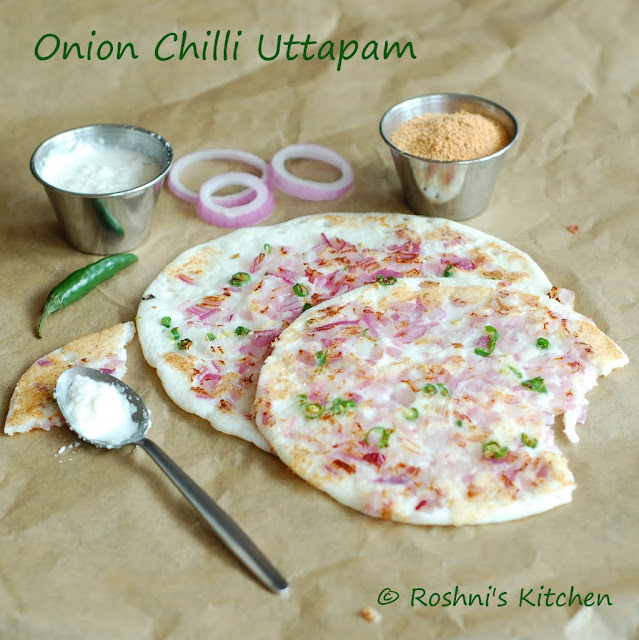
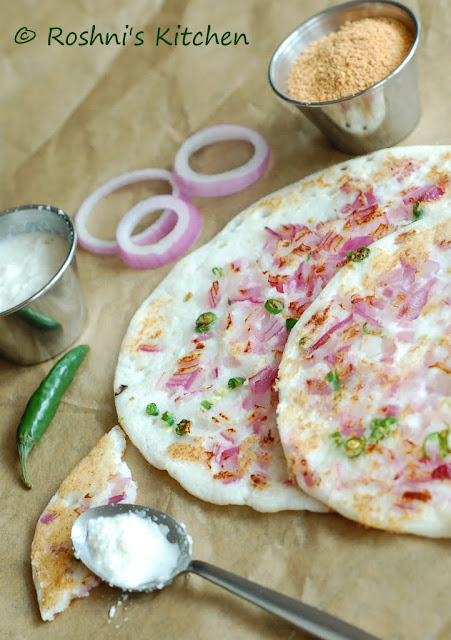
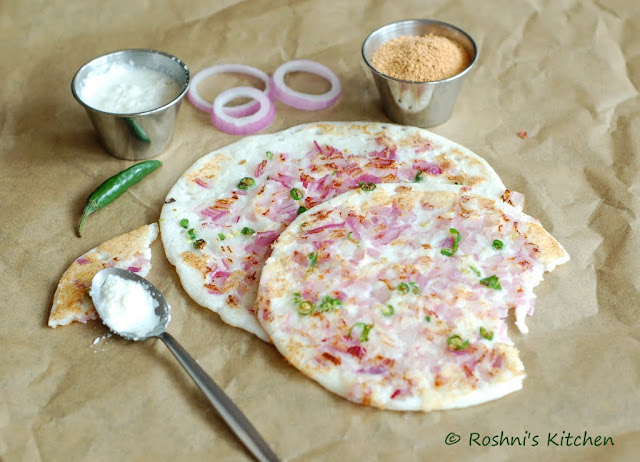
Onion Chilli Uttappam - Savoury Indian Pancake


Uttapam is similar to dosa and is made with the same batter. The main difference is that it is made thicker and softer than dosa. Also usually it is topped with some veggies. Today I have made a Onion and Chilli Uttapam.


Ingredients (to make 1 uttappam)

Dosa Batter 1/4 cup (see notes below)
Onion finely chopped 2 tbsp
Green Chilli 1/2 tsp
Sesame oil (or any oil) as required.


Method of Preparation

1. Pour Dosa batter on a hot pan. Do not spread it much.

2. Immediately sprinkle the onions and green chillies. Cook on one side. Add a few drops of oil.

3. Flip and cook on the top side just a little.

Serve with some chutneys or molaga podi (lentil spice powder).

Notes : Dosa/Idli Batter

If you are new to making dosa batter, this is a quick description of the method of making Dosa/Idli Batter. I use 1 cup of urad dal (whole pealed) and 3.5 cups of rice (idli rice). Soak rice in hot water for 3 hours and urad dal along with 1 tsp of fenugreek seeds in cold water for 1 hour. grind urad dal with about 2 cups of water adding little at a time. Takes 30 min in my grinder. Keep aside. Grind Rice with about 2 cups of water adding little at a time. It takes 20 min in my grinder. Mix both with 2 tsp of salt. Allow to ferment overnight. Dosa/Idli Batter is ready to use. If making Idli or Uttappam you can use this batter as is. If making Dosa, add some more water to adjust the consistency.

After cooking with Legumes and making Salads, AnuRadhika and I (my recipes) are making Dosa Varieties this month for Palooza in the pan. Stay tuned for more dosa varieties from all of us. 

Sunday, 28 July 2013

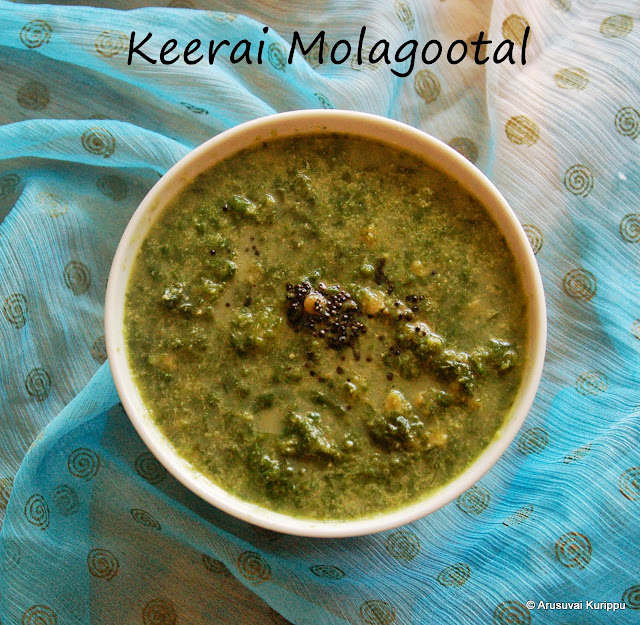
Keerai Molagootal - Spinach Cooked in a Lentil and Coconut Gravy - Palakkad Iyer Recipe

Palakkad is a place in Kerala. Palakkad Iyers (Tamilians living in Kerala) have developed a unique Cuisine for themselves over the years which has influence of Tamil and Kerala Cuisines. I am a Tamilian from Trivandrum. So it is not a surprise that I have not posted many Palakkad Recipes. This one has been in my list for a long time and so I decided to make it. Where else would I go for Authentic Palakkad Recipe than my friend Kaveri's Blog! I have used her recipe to prepare it. To be honest we felt it was quite similar to the Keerai Kootu that we make. May be we do not call it Molagootal :-)

Tasted Fabulous. And this is coming from someone who is not a very crazy fan of Spinach!


Ingredients

Spinach about 900gms
Toor Dal 1/2 cup

Urad Dal 2 tsp
Dried Red Chilli 2
Coconut 1 cup
Jeera/Cumin 2 tsp

Mustard 1 tsp
Coconut oil 2-3 tsp
Salt to taste

Method of Preparation

1. Pressure cook the Toor Dal with 2 cups of water till it is well mushed up. Whisk it and keep aside. Alternately cook the dal on stove top till it is fully cooked. Soaking the dal ahead of time helps if you are cooking it on the stovetop

2. In a pot add Spinach and 2 cups of water. Cook till it wilts. You might have to do it in batches. Once wilted I was left with about 3-4 cups of spinach. Reserve the cooking water.

3. Cool and Make a coarse puree of the spinach. Use the reserved water as required.

4. In a small pan, add 2 tsp of coconut oil (Use any oil). Add Urad dal. When it starts to brown, add the red chillies and let it sizzle. Drain and Add to a mixie along with coconut and cumin. Keep the oil in the pan. Grind into a smooth paste adding enough water. You can use the spinach water for this as well.

5. Add the spinach puree, coconut paste and dal into the pot along with any left over cooking water (add more if needed). Add some salt as well. Bring to a boil and simmer for a few minutes.

6. In the small pan, add 1 tsp of oil if needed and add mustard. When it sputters, transfer to the spinach pot. Stir well.

Serve with Rice.

Thursday, 27 June 2013

Kerala Soya Stew - Vegetarian Chicken Stew - Kerala Ishtu - Side for Aappam - Vegan

Growing up in Kerala eating awesome food, Kerala Cuisine has a special place in my heart. I love the flavours that go in the dishes, the spices! Have I told you before that my favourite herb is curry leaf? Ofcourse, I have told you. Nothing gives me more happiness in the kitchen than the smell and sound of curry leaf sputtering when we do the tempering.
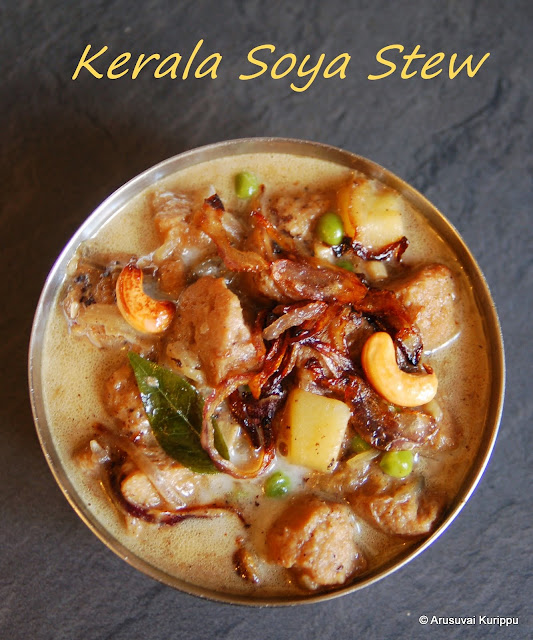


I have made a version of Stew before. Interestingly that is actually my first post for this blog. As I was just starting off, it got lost in the bottom of the pile.

Though I make Stew (or Ishtu as some people like to call it) often I always felt that my recipe was not the perfect one. I was always on the lookout for something that will take the humble Stew to a new level. That is when I saw the Chicken Stew recipe in this site. With so many Authentic Christian Dishes, this site is a perfect place to find Authentic Kerala Non Veg Dishes.
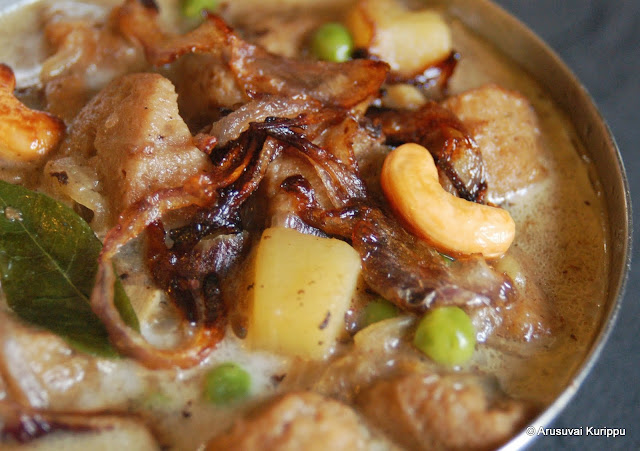


Well as you know I do not cook meat at home. So I had to do my own twist!! If you do not know, I have worked my way thru a lot of non veg dishes and made it into Veg (mostly Vegan) sides. Go ahead try some of it and I bet you will love it. Here is a list of some of those.

You can also make simple Potato Stew or Vegetable Stew as well using this method.

Ingredients

Soya Chunks 3 cups or use chicken if you want
Potato 1 big or 2 medium (about 1.5 cups cubed)
Peas 1.5 cups
Coconut Milk 1 can

Cinnamon 2 inch piece
Cardamom 4
Clove 4
Star Anise 1
Bay Leaf 1

Onions 2 sliced
Garlic 5 pods sliced
Green Chillies 4 sliced
Ginger 1 inch piece sliced
Curry Leaves 2-3 sprigs

Pepper powder 1/2 tsp
Garam Masala 1 tsp

To fry
Onions 1 sliced
Cashews 10-15

Oil and salt to taste
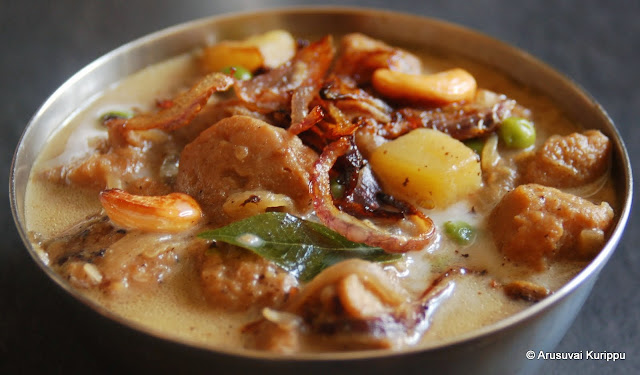


Method of Preparation

1. Heat water in a pot. When it comes to boil, add the soy chunks. Cook for 5-6 minutes. Drain. Add some cold water. When it cools, squeeze the soy chunks so that it does not have any water in it.

2. In a pan, heat some oil. Add cashews. Fry little till it browns a little. Remove to a bowl.

3. In the same oil, add 1 sliced onion. Saute till it is nicely browned. Keep it along with the cashews.

4. In the same pan, add the Cinnamon, cardamom, Clove, Star Anise and bay leaf.

5. When it sizzles, add sliced onions. Saute till it starts to brown.

6. Add sliced garlic, ginger, green chilli and curry leaves. Saute till the onions brown a little.

7. Peal and cube the potatoes. Add to the pan. Saute till it is almost cooked.

8. Add the drained soya chunks. Saute till it all roasted a little. If using chicken, add along with potatoes and let it cook completely.

9. Add steamed peas. Mix well.

10. Also add the pepper powder, garam masala and salt.

11. Take part of the coconut milk (about 1/2 to 1 cup). Mix with 1 cup of water and add to the pan.

12. Close and cook in low-medium heat till all the veggies are cooked and everything comes together.

13. Finally add the rest of the coconut milk and cook in low flame for 5 more minutes. Adjust seasoning as required at this stage.

Serve with some Aappam, Kerala Parota, Idiyappam. This will taste great as a side for Roti or Rice as well.

How better can I close this month's Palooza in a Pan cooking Lentils and Legumes that cook with my favourite Soya Chunks! Other recipes cooked so far this month

Mathanga Erissery - with Van Payar (Tatta payar, Red Chori, Cow Peas)
Mediterranean Vegan Sandwich - Chicke peas
Pasi Paruppu Paniyaram - Moong Dal 

Thursday, 20 June 2013

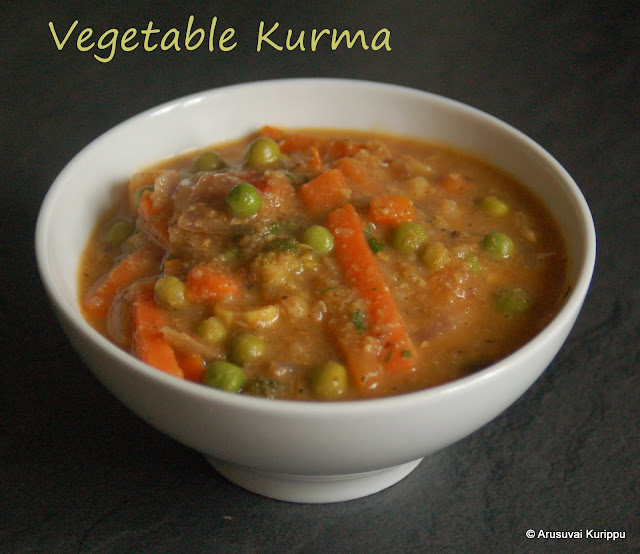
Vegetable Kurma - New Recipe

Kurma makes a great combination for Aappam, Idiyappam and Parota. It can be eaten with rice or roti as well. I have made an array of Kurma recipes in my blog. Do check them all out. I have tried a slightly different recipe this time. Hope you enjoy it.

Navarathna Kurma
Paneer Kurma
Tomato Kurma
Peas Kurma
Nilgiri Kurma


Ingredients

Onions 2
Tomato 3
Potato 3
Mixed Vegetables 5 cups
Green Chilli 2
Curry Leaves few
Coriander leaves a little

For Paste

Mustard 1/2 tsp
Coriander seeds 2 tbsp
Cumin 1 tbsp
Pepper 1/2 tsp
Rice 1 tbsp
Channa Dal 2 tbsp
Fenugreek seeds 1/2 tsp
Clove 2
Cinnamon 1 inch piece
Star Anise 1
Fennel seeds 1 tsp
Ginger 1 inch piece
Garlic 6 pods
Curry leaves few
Tomato 1
Coconut 1/2 cup

Oil and salt to taste

Method of Preparation

1. Boil the potatoes. Peal and cube it.

2. Steam the mixed vegetables in the microwave.

3. Heat a pot and add all the ingredients for making paste, other than coconut and tomato.

4. Once it is roasted a little, add the coconut and tomato and roast for a few more minutes.

5. Add to a mixie and grind into a smooth paste adding a little water.

6. In the same pot, add a little oil. Add sliced onions.

7. Once it is sauted a little, add tomatoes and saute till it is cooked.

8. Add the paste and cook for a few more minutes. Add a little water if needed.

9. Now add the cooked vegetables and boiled potatoes along with some salt and more water if needed.

10. Bring to a boil. Simmer for a little while. Switch off and garnish with coriander leaves.

Saturday, 8 June 2013

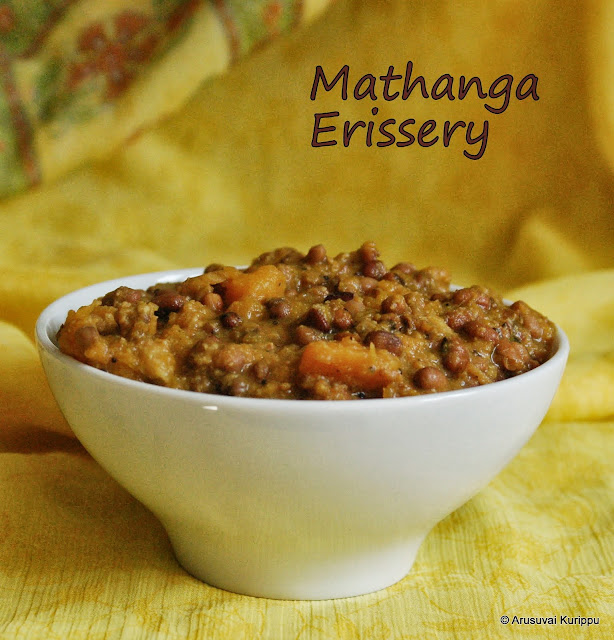
Mathanga Erissery with Van Payar - Pumpkin Erissery - Pumpkin and Cow Peas cooked in a peppery coconut gravy

Erissery is a dish very popular in Kerala. No Sadya (festive meal) is complete without this. Though not as popular as Avial, this is a dish loved by all Malayalees.


There are a couple of variations to this dish. It can be made with a combo of Vazhakka (Plantain) and Chena (Yam) or with Pumpkin. I have already posted the Vazhakka Erissery. So today I have made the Mathanga Erissery.

The use of Cow Peas (Thatta payar, Van Payar, Red Chori) is quite optional. Some people like it and some don't. I never miss the chance to add loads of Lentils and Legumes in my dishes. So I have used 1 cup of cow peas. You can reduce it to 1/2 cup as well or skip it.

From this month on Anusha, Radhika and I are joining hands to party with our cooking pans - Palooza in a Pan. The idea is to cook 4 dishes of a theme exploring different things together. Am really excited about it. This month we are cooking with Legumes. Do check out my friends as well.


Ingredients

Pumpkin (or use Butternut Squash) 4 cups
Turmeric 1/2 tsp
Salt to taste

Cow Peas 1 cup

To grind to paste
Coconut 1/2 cup
Pepper 1/2 tsp (add 1 tsp for more spicy flavour)
Jeera/Cumin 1 tsp

To Roast
Coconut oil (or any oil) 2 tsp
Mustard 1 tsp
Coconut 1/4 cup
Dry Red Chilli 2
Curry leaves few

Method of Preparation

1. Soak the cow peas overnight and pressure cook by adding enough water for 1 whistle till it is cooked well, but retains its shape.

2. Cut the pumpkin into small pieces. Add 1-2 cups of water and boil till it is almost fully cooked.

3. In the meanwhile make a paste of coconut, pepper and jeera adding enough water.

4. In a small pan, add the coconut oil. Add mustard. When it sputters, add the red chilli and curry leaves. When it sizzles, add the coconut and saute in a medium-low flame till it is nicely browned. Keep aside.

5. When the pumpkin is ready, add the cowpeas and coconut paste. Add water if required. Bring to a boil and simmer till water is almost absorbed and everything comes together. About 5-10 min.

6. Finally add in the roasted coconut and stir well.

Serve with rice. We enjoyed it with some Roti today. It was also a good combination (unexpected)!

Friday, 26 April 2013

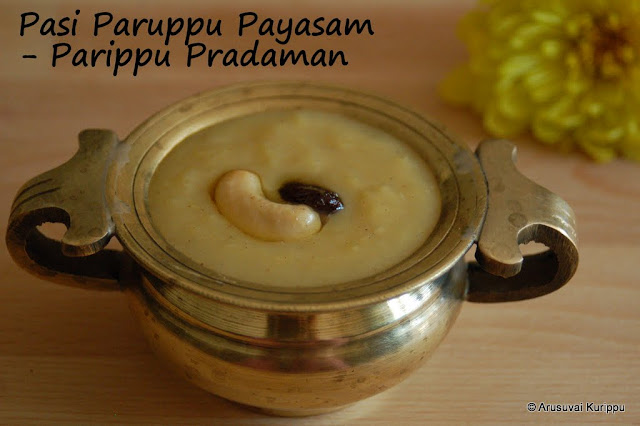
Pasi Paruppu Payasam - Parippu Pradaman - Moong Dal Kheer


Pasi Paruppu Payasam or Parippu Pradaman is a very easy payasam to make. Just takes 5-10 minutes of your time and rest is all cooking time. How easy can it get?

I made this for Tamil New Year. This was a fairly thick payasam. Next time, I may try adding more coconut milk/milk to it to loosen it up..

Ingredients

Moong Dal 1 cup
Jaggery 1 cup (My jaggery is not very sweet. So I needed this much. You might want to start off with 1/2 cup)
Coconut Milk 1 can (about 2 cups)
Cardamom 1/2 tsp
Ghee 1 tbsp - use oil for vegan version
Cashews few
Raisins few


Method of Preparation

1. Pressure cook the Moong dal till it is well mushed up.

2. Add jaggery to a pan. Add a little water. When the jaggery melts, filter out any impurities. Keep ready.

3. In a pan, add the ghee. Add cashews. Fry till it browns a little. Keep aside.

4. In the same pan, add the raisins. Fry till it fluffs up a little. Keep aside.

5. Add the cooked Moong dal to the pan. 

6. Add Jaggery Syrup and cardamom powder. Mix well. 

7. Now add the coconut milk and mix. Keep gas in simmer after the coconut milk is added. 

8. When it starts to thicken, add the cashews and raisins. 

Serve warm

Tuesday, 23 April 2013

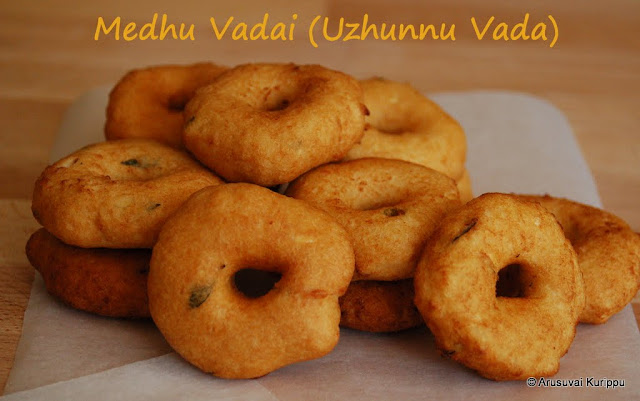
Medhu Vadai - Ulundu Vadai - Uzhunnu Vada


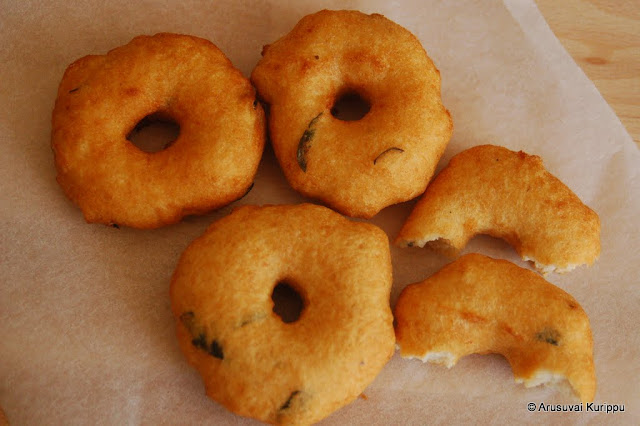
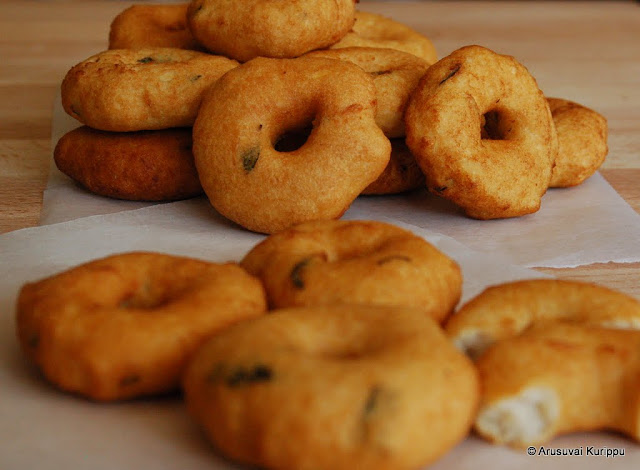
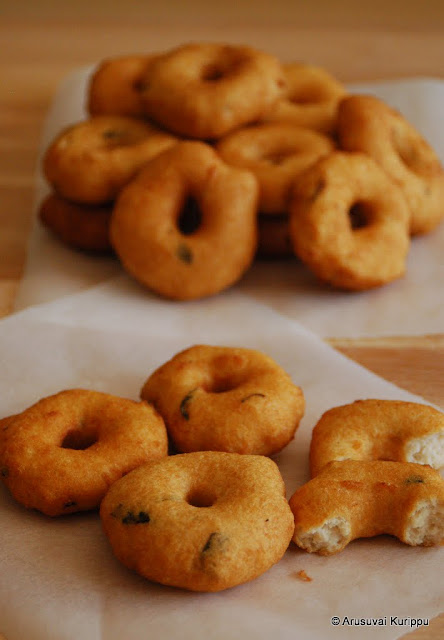
Medhu Vadai is also known as Ulundu Vadai and Uzhunnu Vada in Kerala. It is basically Urad Dal ground into a batter and deep fried. It is crispy on the outside and soft on the inside.
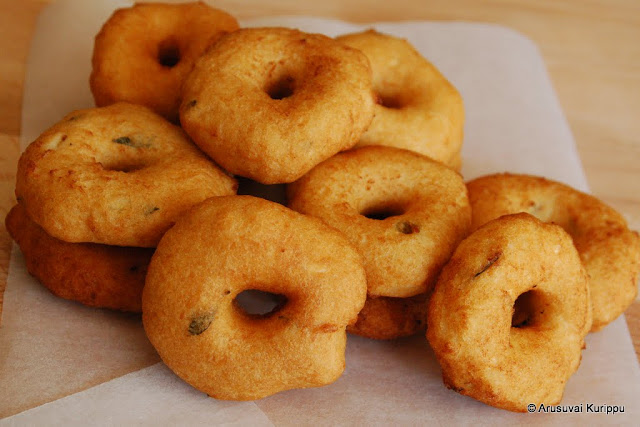


No festival meal in Tamil Nadu is complete without this Vada. Ofcourse, it can be enjoyed as part of breakfast with idli and dosa. Chutneys (coconut, mint etc) and sambar make a great accompaniment to these Vadas. Once you master the art of making these Vadas, you can make Sambar Vada, Thayir Vada (Dahi Vada) etc.


Ingredients

Pealed Whole Urad Dal 1 cup
Curry leaves few
Green chilli 1-2
Corn Flour 1 tsp
Salt to taste

Oil for frying


Method of Preparation

1. Soak the urad dal for about an hour. Drain water.
2. In a grinder, add the urad dal. Grind into smooth paste. Do not add any water. Just keep sprinkling water as the dal is getting ground.
3. Grind till it is a smooth paste. It took me about 10 minutes in my grinder.

4. Test that the dal is perfect - if you take a small pea sized ball and put it in a bowl of water, it should float. If you hold it upside down in your palm, it should not fall down.

5. Add the corn flour just before switching off so that it gets mixed well.

6. Transfer to a bowl. Cover and refrigerate for 30 minutes.

7. Finely chop green chillies and curry leaves. Mix it to the batter along with salt just before making Vada.

8. Heat oil to deep fry the vada.

9. Take a small portion of batter in your hand. Put it on top of a ziploc bag (Banana leaf or Milk packets used in India earlier). Pat it flat. Using your finger poke a hole in the centre.

10. Gently transfer it to the heated oil. Add 2-3 more to the pan depending on its size.

11. Cook on once side in medium heat till it is browned. Turn and cook on the other side as well.

12, Drain and transfer to a plate lined with kitchen paper.

Enjoy with some coconut chutney and sambar.

Monday, 22 April 2013

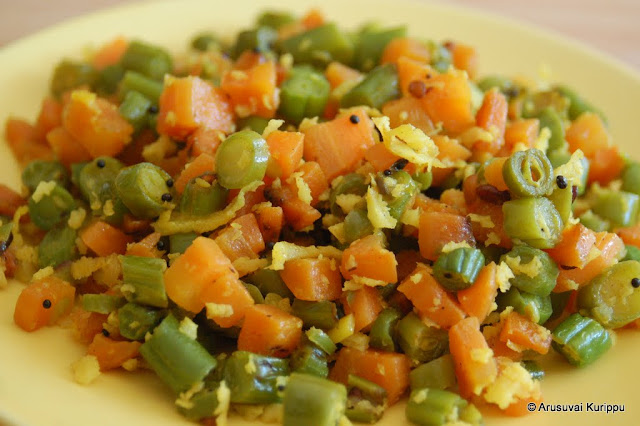
Beans Carrot Poriyal


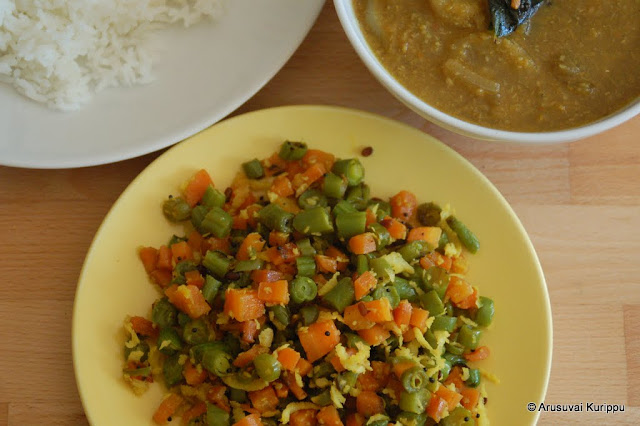
Poriyal is a side dish made in Tamil Nadu. It is quite similar to Thoran made in Kerala. But subtle things make it different. They also kind of look they same. As I usually make a Thoran, I decided to make it a Poriyal style.

Ingredients

Carrots 8
Beans 20-30
Coconut 1/2 cup
Mustard 1/2 tsp
Urad Dal 1 tsp
Turmeric 1/2 tsp

Oil and salt to taste


Method of Preparation

1. Finely chop carrots and beans.

2. Heat a little oil in a pan. Add mustard. When it sputters, add urad dal. When it starts to brown, add turmeric.

3. Add the chopped beans and carrots. Saute till it is cooked well.

4. Add coconut and salt. Mix well. Cook for another minute or 2 and switch off.

Saturday, 13 April 2013

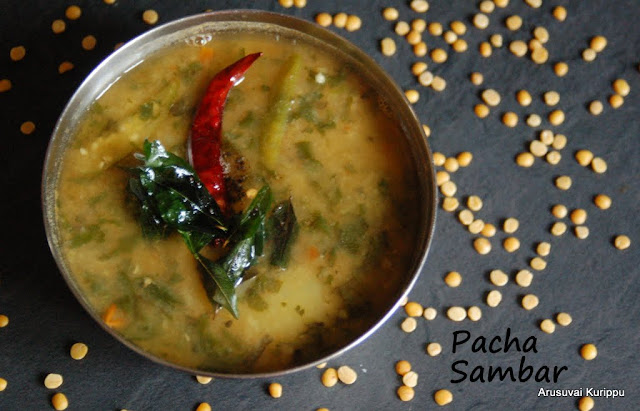
Pacha Sambar


Pacha Sambar loosely translates to Green Sambar or Green Lentil Stew. I saw this recipe in Aparna's blog. I was actually surprised when she wrote that this is a recipe from Kerala. I had never heard of it. Decided to give it a try. I am not sure if it quite tasted like Sambar to me. It was more like a lemony dal, tasty nevertheless.

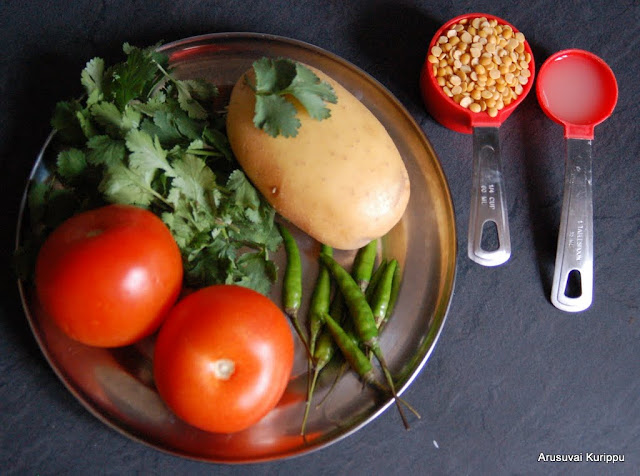
Ingredients

Potato 2
Tomato 2
Green Chilli 4
Toor Dal 1 cup
Turmeric 1/2 tsp
Coriander leaves chopped 1 cup
Methi leaf 1/4 cup (i used 1 tbsp Kasuri Methi)
Lemon Juice 3 tbsp
Salt to taste


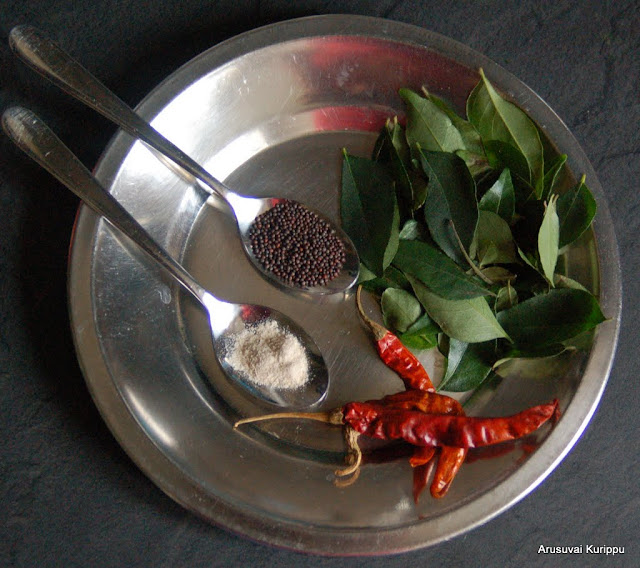
Seasoning
Mustard 1 tsp
Hing a little
Dried Red Chilli 2
Curry leaves 2 sprigs
Oil


Method of Preparation

1. In a pot, add cubed potatoes, tomatoes, slit green chillies and some water. Bring to a boil.

2. Add chopped coriander leaves and methi leaves.

3. Cook till the potatoes are nearly done.

4. Pressure cook Toor dal with enough water. Give it a whisk.

5. Add to the pot of sambar along with some salt. Simmer for 5-10 minutes. Switch off.

6. For Tempering, add oil in a small pan. Add mustard. When it sputters, add red chilli, curry leaf and hing. When it sizzles, pour it over the sambar.

7. Add the lemon juice at the end.

Serve with Rice.

Sunday, 17 March 2013

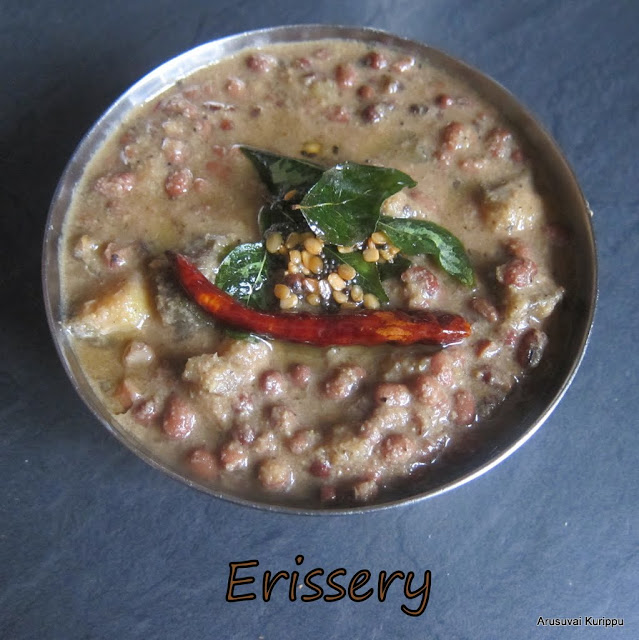
Vazhakka Erissery - Erissery with Raw Plantain

Erissery is a speciality of Kerala. The speciality is that it does not have many spices. The flavours mainly come from coconut, pepper and cumin and of course the tempering with coconut oil. I have prepared this with Vazhakka (Raw Plantain). Usually it is prepared with a combination of Vazhakka and Chena (Elephant Yam). Use equal quantities of both if you have it. Just Vazhakka also tasted awesome.

For the dal, I have used Cow Peas (Van payar/Thatta payar). You can also use the white one popularly known as Black eyed peas. Oh, and I have used loads of dal in this (more than traditionally used). You can just make it with 1/2 cup instead of the 1.5 cups that I have used.


Ingredients

Vazhakka 5
Cow peas 1.5 cups

Coconut 1 cup
Pepper 1.5 tsp
Jeera 1 tsp
Turmeric 1/2 tsp

Tempering
Mustard 1/2 tsp
Red Chilli 1
Curry leaves few
urad dal 1 tsp
Coconut oil

Method of Preparation

1. Soak the peas overnight and pressure cook for 1 whistle till it is cooked well (still retaining shape.

2. Heat some water in a pan. Add pealed and chopped plantain. Boil till it is cooked well, but has its shape.

3. Make a paste of coconut, pepper and cumin. Add to the pan.

4. Add the cow peas and some salt. Simmer everything for a few minutes.

5. Temper with coconut oil. Add mustard. When it sputters, add urad dal. When it starts to brown, add red chilli and curry leaves. Add this mix to the Erissery.

Tuesday, 12 March 2013

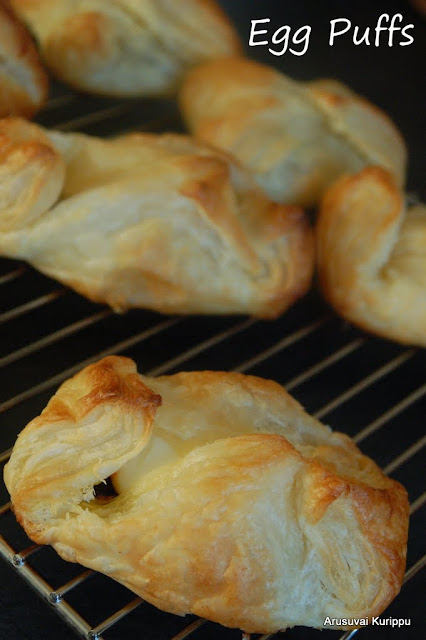
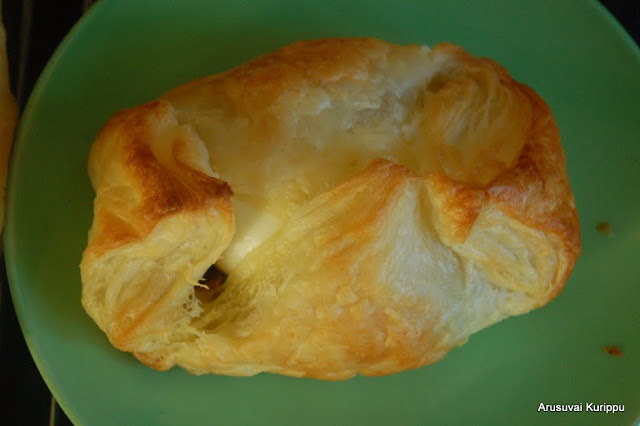
Kerala Style Egg Puffs


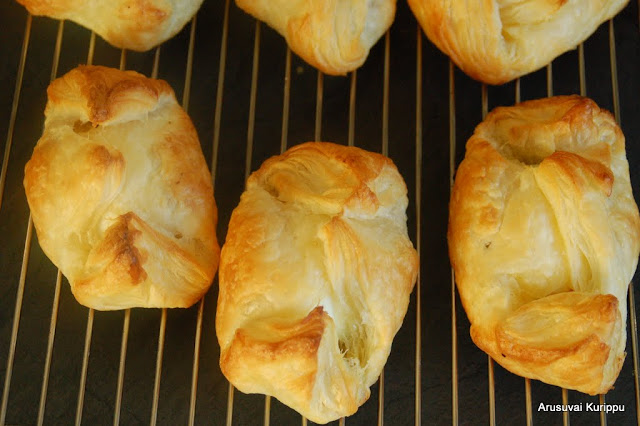
Puff is one thing we used to get a lot from our neighbourhood bakery along with plum cake (sliced and packed in paper wrapper). In those days, baking anything at home was not an option. We did not have an oven. When I moved to US, I found puff pastry sheets and learnt how easy it was to make puffs with these. When I made Croissants from scratch, i learnt the 'Lamination' technique of layering dough and butter. Now I appreciate how hard it is to actually make Puffs.

Puffs come in different shapes in my hometown (guessing same in most places), based on the stuffing. For eg, Veg puffs are always made rectangular like here. Egg puffs are made squarish by pulling the corners together. Chicken puffs are made triangular. Its easy for the baker and customer to not make any mistakes. I guess that is why they are shaped like that :-)

I have used store bought puff pastry sheets for this recipe.

Ingredients

Puff Pastry sheet 1
Eggs 3
Onion 1 big thinly sliced
Green chilli 3
Curry leaves few
Cumin/Jeera 1 tsp
Turmeric powder 1/2 tsp
Coriander powder 1 tsp
Oil and Salt as required

Method of Preparation


1. Heat oil in a pan. Add Cumin, green chilli and curry leaf.

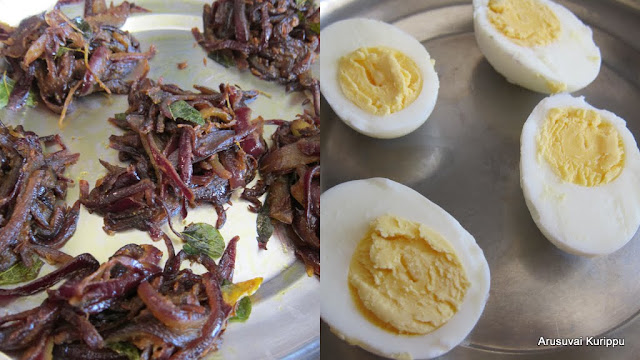
2. When they sizzle, add sliced onions. Saute till it is nice and brown.

3. Add coriander powder, turmeric and salt. Mix well. Switch off after a few minutes. Split into 6 parts.

4. Boil water in a pan. Add some salt to it. (this will prevent the egg from leaking even if they collide and one of them breaks). Add the eggs. Cook for 10-12 minutes. Switch off. Drain water and add cold water. Let it sit for 5 minutes. Peal the eggs. Slice into 2.


5. Lay the pastry sheet on a surface. Mine was 15cm by 10 cm. So I cut them into 6 squares of 5 cm * 5cm. I felt it was slightly big. But cutting into 9 would have made it very little.

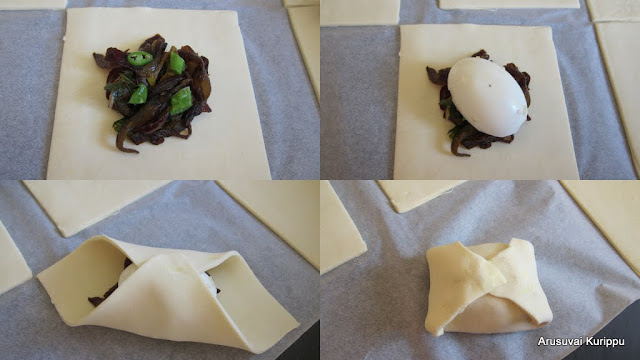
6. Place a portion of the onion mix on it.

7. Place a slice of egg cut side down.

8. Pull 2 sides and wrap over the egg. Usually, it will just reach. As mine were bigger squares, it wrapped around well.

9. Pull the other sides and cover the egg.


10. Place on a baking sheet lined with parchment paper.

11. Brush with some milk.

12. Preheat an oven to 200C. Bake the puffs for 15-20 min. Mine were done in 18 min.

13. Cool in a wire rack. Serve!